Your roof does more than keep you dry. It adds to your home’s style and protects it throughout the year. Different roof types serve various purposes, giving homes unique looks. Knowing your roof type can help you plan for maintenance and repairs. Ricardo's Alpha Roofing in Columbus, NC, wants to help you identify your roof type and help you understand why it matters.
Why Roof Identification Matters
Roof type plays a significant role in home safety. In North Carolina, roofs must withstand hurricanes, long summers, thunderstorms, and occasional snow. A hip roof, for example, resists winds better than a gable roof. Flat roofs may struggle with drainage during heavy downpours.
Certain roofs are better suited to support solar systems. If you know your roof type, you can make more informed decisions about repairs. Additionally, insurance companies often request information about the roof type when writing coverage. Identifying your roof type now prevents confusion if problems arise later.
Common Roof Shapes in North Carolina Residential Homes
You will find a variety of roof shapes on homes in North Carolina. Some are more popular by region.
Gable Roofs
North Carolina homes often have gable roofs. A gable roof has two sloped sides that form a triangle shape. This simple design sheds water quickly, protecting your home from damage.
Hip Roofs
Hip roofs slope on all four sides. They remain strong during hurricanes, preventing lifting on all sides. Many North Carolina coastal homeowners install hip roofs to protect against the high winds of frequent hurricanes.
Flat Roofs
Flat roofs are a popular choice for modern homes and beachfront houses. They require excellent drainage systems to prevent standing water. The flat surface provides a safer and more stable platform for inspections and general repairs.
Mansard Roofs
Mansard roofs feature a distinctive French design characterized by two sloping sides. Many homeowners who install this type of roof like the added attic or loft space. Mansard roofs are ideal for installing solar panels.
Gambrel Roofs
Gambrel roofs give the appearance of a barn. They use two large slopes on each side, creating expansive upstairs space.
Shed Roofs
Shed roofs tilt in one direction only. Builders often use them on sheds, additions, and porches.
Each shape determines how your roof performs in various weather extremes. It’s essential to understand the available shapes before installing a roof, so you can adequately protect your home.
Roofing Materials and Their Appearance
Roofing materials vary widely. Not only do you need to understand the shape of your roof, but you also need to know the materials used in its construction.
Asphalt Shingles
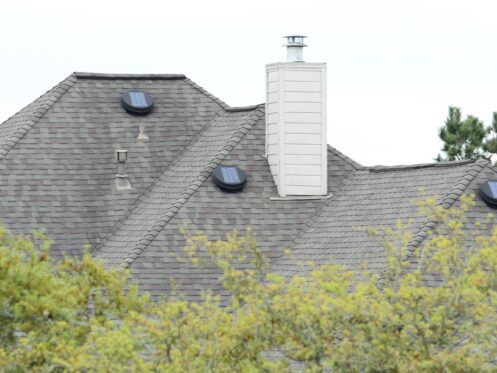
Asphalt shingle roofs dominate North Carolina homes. They are affordable, durable, and easy to spot. Shingles have overlapping layers and are available in colors such as gray, brown, and black.
Metal Roofs
Metal roofs are also a common sight on homes throughout North Carolina. Metal is a particularly popular material in North Carolina’s coastal regions due to its resistance to damage from salty air. This roofing material comes in long sheets or shingles.
Clay & Concrete Roofs
You will see clay or concrete tile show up on Mediterranean or Spanish-style homes. These heavy materials withstand heat well but require extensive support to maintain their weight.
Wood Shake Roofs
Wood shake roofs give North Carolina homes a rustic look. Cedar is a popular choice, although it requires regular maintenance, especially in humid climates.
Slate Roofs
It’s not unusual to find slate roofs in North Carolina, especially on older homes. They are very durable but also very heavy and do not work on all homes.
Synthetic Roofs
Synthetic roofing is also gaining popularity in homes throughout North Carolina. It mimics the look of wood, slate, or tile at a fraction of the weight.
Each material creates a distinctive roof look and has a different level of durability. Understanding the differences can help you make wise choices.
How to Spot Roof Pitch
Pitch refers to the steepness of your roof. Steeper roofs shed water and debris more effectively. In North Carolina, higher pitches help during storms. Lower pitches can trap water if drainage fails.
A gentle slope typically indicates a low-pitched roof. A sharp angle means a high pitch. Professional Roofers use specialized tools to check for roof pitch. Knowing your roof pitch is essential for accurate gutter system installation and repairs.
Know Your Roof, Protect Your Home
Every roof offers its own unique advantages and disadvantages. Knowing your roof type helps you make better choices for maintenance and roof repairs. It also prepares you for upgrades, storms, and insurance claims. Professional guidance ensures you have the correct information.
Ricardo's Alpha Roofing is a roofing company in Columbus, North Carolina. With over 10 years in business, you can rest assured that we have the knowledge and attention to detail to assist you with all your roofing needs. We offer customized roofing solutions for all NC homes.
Contact Ricardo's Alpha Roofing today to schedule roofing services in Columbus, NC. We can help you identify your roof type for informed decision-making.

